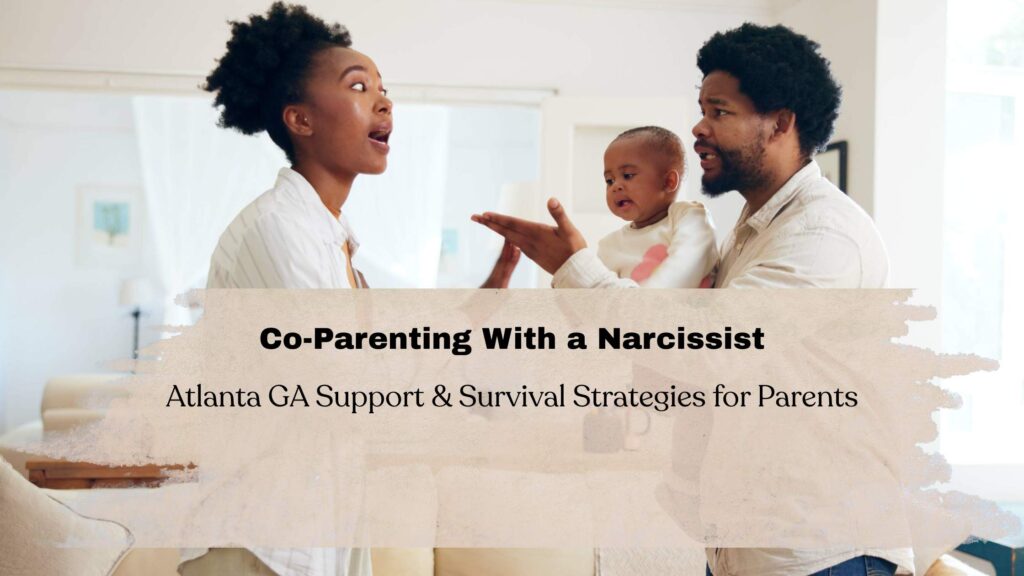
Atlanta GA Support & Survival Strategies for Parents
Co-parenting is rarely easy—but when you’re navigating it with a narcissistic ex-partner, it can feel emotionally exhausting, confusing, and at times overwhelming. If you’re in Atlanta, GA, and facing this challenge, know that you are not alone—and more importantly, there are ways to protect your peace, support your child, and regain a sense of control.
This guide will walk you through what to expect, how to cope, and where to find the support you need.
Understanding Narcissistic Co-Parenting Dynamics
A narcissistic co-parent often prioritizes their own needs, control, and image over the well-being of others. This can show up in several ways:
- Constant conflict or refusal to cooperate
- Manipulation or gaslighting
- Using children as messengers or leverage
- Inconsistent parenting or broken agreements
- A need to “win” rather than collaborate
Recognizing these patterns is the first step toward creating a healthier strategy for yourself and your child.

The Emotional Toll on Parents and Children
Living in this dynamic can drain your emotional energy. You may feel:
- Frustrated or powerless
- Anxious about interactions
- Guilty or unsure of your decisions
- Concerned about your child’s emotional well-being
Children, too, may experience confusion, loyalty conflicts, or emotional stress. That’s why your stability becomes their anchor.

Survival Strategies for Co-Parenting With a Narcissist
1. Set Firm Boundaries
Boundaries are not about controlling the other parent—they’re about protecting your mental and emotional space.
- Communicate only about child-related matters
- Use written communication when possible
- Keep conversations brief and factual
2. Shift to Parallel Parenting
When cooperation isn’t possible, parallel parenting can reduce conflict.
- Each parent manages their own household independently
- Limit direct interaction
- Stick to structured schedules
This approach minimizes opportunities for manipulation.
3. Document Everything
Keep records of communication, agreements, and incidents.
- Save emails and messages
- Maintain a parenting journal
- Track missed visits or concerning behavior
Documentation can provide clarity—and protection if legal issues arise.
4. Don’t Engage in Power Struggles
Narcissistic individuals often thrive on reaction.
- Avoid emotional responses
- Stay calm and neutral
- Don’t try to “win” arguments
Your peace is more important than proving a point.
5. Prioritize Your Emotional Health
You cannot pour from an empty cup.
- Seek therapy or counseling
- Practice stress management techniques
- Build a support system of trusted friends or groups
In Atlanta, many parents find strength in local support communities and professional guidance.
6. Support Your Child Without Overcompensating
Your child doesn’t need a perfect parent—they need a consistent one.
- Validate their feelings
- Avoid speaking negatively about the other parent
- Provide stability and routine
Your calm presence helps them feel safe.
Finding Support in Atlanta, GA
You don’t have to navigate this journey alone. Atlanta offers a range of resources:
- Family therapists specializing in high-conflict co-parenting
- Support groups for divorced or separated parents
- Parenting coaches who understand narcissistic dynamics
Seeking help is not a sign of weakness—it’s a powerful step toward healing.
A Smarter Way Forward: Structured Co-Parenting Support
If you’re tired of feeling reactive and overwhelmed, having a clear roadmap can make all the difference.
The Roadmap to Healthy Co-Parenting course is designed specifically for parents navigating difficult co-parenting situations—including those involving narcissistic behaviors. It provides practical tools, communication strategies, and emotional support to help you:
- Set and maintain boundaries
- Reduce conflict and stress
- Focus on your child’s well-being
- Build confidence in your parenting approach
You can explore the course here:
https://kohparenting.com/coparenting-course/
You’re Not Powerless—You’re Learning a New Strategy
Co-parenting with a narcissist may not change on their end—but your approach can transform your experience. With the right tools and support, you can move from survival mode to a place of clarity, strength, and stability.
A Note from Detrice
Co-parenting with a narcissistic partner can feel like an uphill battle—but I want you to know this: you are stronger than the chaos you’re experiencing.
You don’t have to keep reacting, second-guessing, or feeling stuck. There is a healthier way to navigate this journey—one that protects your peace and prioritizes your child’s emotional well-being.
I created the Roadmap to Healthy Co-Parenting to give parents like you the clarity, structure, and confidence you deserve. You’re not alone in this—and you don’t have to figure it out by yourself.
Take the next step when you’re ready. Your peace matters. Your child’s future matters. And so do you.
Join our Co-Parenting Community
Take the next step toward a healthier, more confident parenting journey.
Join a community that understands your challenges and equips you with tools that truly make a difference.